
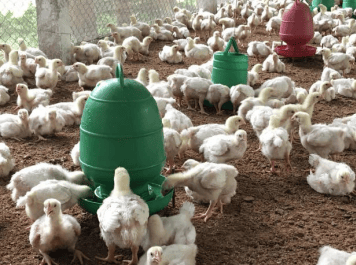
Nipple drinker systems offer more controlled supply of hydration for your poultry flocks.
This presents two major advantages over bell drinker systems:
- Minimal waste
- Accurate monitoring
But these advantages come at an additional cost compared to bell drinkers.
So there is an economic trade-off.
Pay more now for savings later. That said, do the savings warrant the additional expense?
Hardware & labour costs: Poultry bell drinker system vs nipple drinker system
Bell drinker system
Bell drinker systems include:
- bell drinker units
- pipes/tubing
- header tanks
A bell drinker system is gravity-fed and feeds water from the header tank, along the tubes, and into the bell drinkers. The water level in the bell drinker is monitored, and when it falls below a set level, this triggers more water to flow.
Nipple drinker system
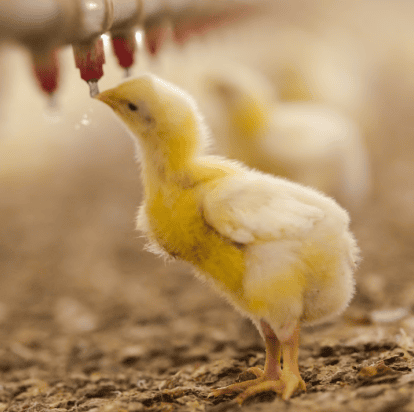
Nipple drinker systems include:
- nipples
- trays
- pressure regulators
- flushing
- pump
+ pump for pressurised delivery (additional cost)
Nipple drinker systems rely on contant optimal water pressure throughout the lines. And therefore require some sort of pump mechanics.
+ pressure regulators and monitors (additional cost)
Also, systemic pressure regulators and monitoring equipment is necessary to ensure optimal pressure at every nipple is maintained.
+ monitoring and quality assurance staff routines (additional cost)
Performing flow meter testing, recording and auditing pressure logs – this is additional staff overhead that increases operational fixed cost.
Real performance and economic benefits of using a poultry nipple drinker system
Nipple drinker systems give farms more control over water supply to flocks. Greater control, leads to greater operational performance (production of meat or eggs), which translates into revenue and profits.
Less waste
Recource efficiency
More water getting into your birds means the associated cost savings of sourcing and treating that water.
Drier litter
More water going into your birds, instead of being splashed onto the floor, means drier litter. And drier litter means: lower ammonia levels, lower bacterial growth and overall improved sanitation in the barn. Healthier birds, optimal feed conversion.
Optimal consumption
Better temperature regulation
Birds that are well hydrated can regulate their temperature better. They are less prone to thermal shock. And will convert feed more optimally.
Better metabolism
Hydration is a necessary input and regulator for metabolism. And so birds’ growth and production performance, both layers and broilers, is dependent on optimal metabolic conditions – including water consumption. Get this right and your flocks will have better feed conversion.
Optimal feed consumption
Water intake is also a known regulator of bird feed consumption. In other words, flocks that are hydrated, have regulated appetites, and will consume feed at optimal levels. This improves the chances of achieving genetic potential.
Better water quality
Lower contamination
Nipple drinker systems are closed. The water is delivered to the nipple without open-air exposure. So long as tanks, tubes, connectors and nipples are regularly flushed and sanitised, there is little chance of contamination. Whereas bell drinker systems present an opportunity for birds to contaminate standing water at the drinker end.
Cleaner water leads to healthier birds and again, this results in better feed conversion and liveability.
Conclusion
Whilst there are real material cost disadvantages to buying and maintaining a poultry nipple drinker system. In the long-run, the realised economic returns from optimal feed conversion and liveability will far outweigh the upfront cost.
Leave a Reply