
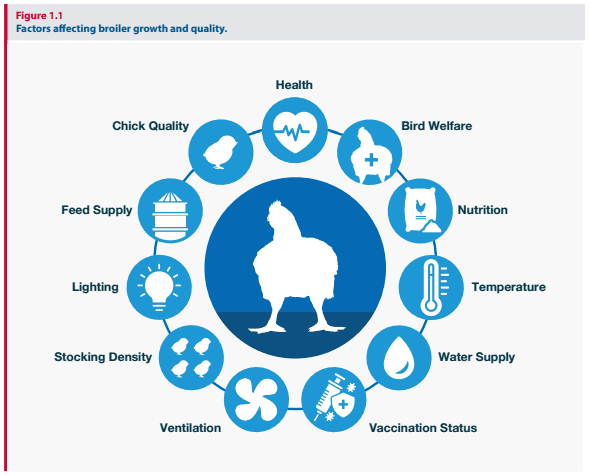
(Image source: AA Aviagen)
11 factors of poultry farming
-
- Chick quality: the ‘seeds’ of the entire poultry farming process. All future growth potential of the birds is derived from a combination of the genetic potential of the selected breed of chicks.
- Health: there’s no secret that broilers and layers are most vulnerable to health challenges as chicks. In fact, it is said that getting past the 1st 7 days is indicative of future poultry farming success.
- Bird welfare: once on the farm, stockmanship is the management process by which the ‘good start’ your chicks gained from the hatchery pays off in the long run.
- Nutrition: ensuring the birds have optimal feed composition, condition, particulate size, availability, and formulation for each stage of growth is a critical input for performance.
- Temperature: as chicks, poultry cannot thermoregulate. This places them at the mercy of your stockman’s environmental temperature management at their most fragile phase.
- Water supply: clean, cool and constant water supply – provided via an accessible system (if drip fed, under good pressure, or drinkers distributed sufficiently). Water is commonly recognised for its precursor effects in regulating appetite for feeding.
- Vaccination status: obtaining chicks from a reputable hatchery means they arrive on your farm site with a complete vaccination status (in accordance with best breeder practice).
- Ventilation: a well-ventilated poultry house is key to temperature and humidity control, as well as air quality for optimal growth performance.
- Stocking density: space allocation for your poultry flock is a critical factor for performance. It impacts their ability to access adequate food & water. Also, overstocking can lead to overheating, litter saturation (and associated issues like skin lesions), and high airborne ammonia levels.
- Lighting: a well-designed lighting programme ensures sufficient rest and activity/feeding periods during the brooding, laying, and growth stages.
- Feed supply: adequate, high-quality feed, specially formulated for the appropriate stage of growth or production of broilers and layers, leads to optimal performance.
Other factors
Stockmanship
Management of the above 11 factors will contribute to and compound overall performance. It’s the stockman’s responsibility to execute the optimal management plan. If managed well, the birds have the best chance of achieving their genetic potential.
Business management
Without the necessary resources (quality, quantity, and timing), none of the above is possible. So, a prudent business management style is required to ensure the inputs necessary for success are available.
Leave a Reply